


Culture · Ideas · Profile
The Man Who Refused to Be One Thing
Across books, R&B, fashion, visual art and a podcast about inherited identity, Al West is building a body of work around a deceptively radical proposition: that a person should have the right to author the self.
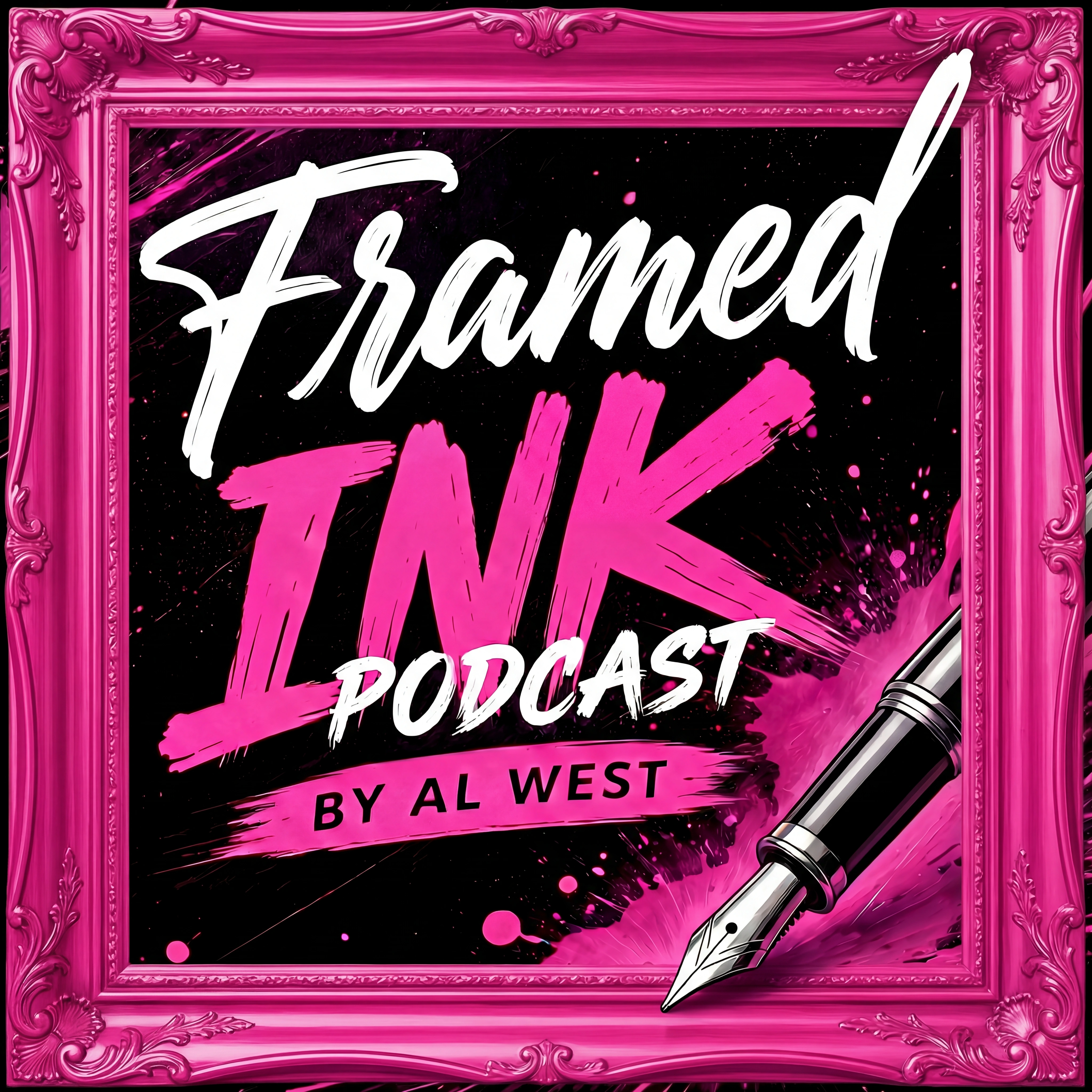
Open five browser tabs and Al West appears to become five different men. In one, he is an author writing about the identities people inherit before they are old enough to challenge them. In another, he is a recording artist moving through warm, grown R&B. In a third, he is an art-house founder selling numbered objects as if scarcity were a form of punctuation. Then there is the clothing house — black and pink and self-consciously uninterested in chasing a sale. And finally there is Framed Ink, a podcast built around the idea that the invisible structures surrounding a life can eventually become a cage.
Stay with the tabs long enough, though, and the multiplicity collapses. The same question keeps surfacing beneath every medium: how much of a life is actually chosen?
That question is the real product. The books, records, garments, artworks and episodes are merely different containers for it.
West has built his creative world around identity — but not identity in the familiar branding sense. Not a logo, a demographic or a neatly marketable persona. His work is interested in identity as inheritance: the names families give us, the performances communities reward, the versions of success we learn to imitate, the survival habits that once protected us and later begin to limit us. His author platform describes a mission of helping people move beyond preset identities and recover a more authentic sense of self. Framed Ink sharpens the metaphor: the person is the original work; life supplies the frame.
“The person is the original work. Life supplies the frame.”
It is an idea both intimate and strangely suited to this moment. We live in an age that asks people to perform themselves continuously — on professional platforms, dating apps, social feeds and algorithmic marketplaces. The self is no longer merely lived; it is packaged, posted, scored and optimized. West’s response is not to reject image-making. He is, after all, a meticulous image-maker. His response is to ask who owns the image.
— One Worldview, Five Houses
That distinction is what separates the Masterpiece universe from a conventional collection of side ventures. Each project stages a different confrontation with authorship. Books ask who wrote the story you are living. The podcast asks who built the frame around it. Fashion turns presence into something visible. Visual art makes becoming collectible. Music asks what remains when the noise recedes. And the record label makes ownership literal: masters, publishing, catalog and a direct connection to listeners are treated not as back-office mechanics but as part of the creative ethic.
On the Masterpiece Recording Group site, West’s independence is framed less as rebellion than as responsibility. The label argues that owning the work means being accountable for its sound, its presentation, its relationship with the audience and its long-term value. That may sound like business language, but in West’s ecosystem it doubles as philosophy. Creative ownership becomes a physical version of self-ownership.
There is an almost old-world patience to the way he wants things encountered. The music site offers a private listening room rather than an endless feed. His fashion house says, in effect, that the customer should become a collector. The art house numbers its editions and permanently closes them. The clothing brand rejects discount culture. Across the properties runs a quiet hostility toward urgency — the blinking countdown, the screaming call to action, the online insistence that everything must be consumed now.
“Presence over noise.”
It would be easy to read that as luxury-brand theater. Some of it certainly uses the grammar of luxury: scarcity, restraint, controlled presentation, high-touch language. But the more interesting reading is psychological. West seems less fascinated by expensive things than by the dignity of things that refuse to beg for attention. A garment, a song, a painting — and, by extension, a person — is allowed to stand without pleading to be validated.
That is why the word masterpiece appears everywhere. In lesser hands it could sound like self-coronation. West uses it more like a counterargument to shame. His author work proposes that a person does not have to earn the right to possess value. The work may need discipline; the human being does not need permission to be worthy. The metaphor of the diamond, the frame, the crown and the masterpiece returns because he is trying to make one point difficult to forget: external judgment is a poor architect for an inner life.
— The Tension That Makes It Credible
There is tension in the project, and the tension makes it more credible. How do you build a brand around escaping labels without simply creating a more attractive label? How do you preach freedom from performance while operating businesses that depend on presentation? How do you sell scarcity without turning belonging into another hierarchy? West does not resolve those contradictions so much as work inside them. That may be the most human part of the enterprise.
His best material is not anti-success. It is suspicious of success that becomes a costume. Framed Ink’s episodes return again and again to people who look functional, accomplished or reliable while feeling estranged from themselves. One episode examines the gilded cage of achievement; another considers the overlooked teenager whose invisibility becomes a training ground for observation. The through-line is not self-esteem as applause. It is self-recognition without an audience.
The same sensibility appears in the music. “This Feels Like Us,” the current single from Masterpiece Recording Group, is built around emotional ease rather than conquest. The song’s world is small on purpose: fewer spectators, less performance, more attention to what feels true when the room is quiet. In a music economy obsessed with virality, West is making a case for intimacy as scale — the possibility that a song can matter deeply before it matters widely.
“A song can matter deeply before it matters widely.”
The art house takes that logic and gives it a wall. Masterpiece Art House presents physical works as authenticated, limited objects — including a collector’s book and an art deck designed for display rather than use. One deck is built on a witty contradiction: an object designed for motion is hung still, while its message insists that neither art nor people are meant to remain fixed. The concept could serve as a thesis for West’s entire output. Identity, in his view, is not a verdict. It is a living composition.
Fashion may be the most immediate expression of that thesis, because clothes sit at the border between the private self and the public gaze. His Masterpieces describes itself less as a store than a house, and rejects the usual machinery of discount-driven retail. Its Black Crown language is about refusing to blend in, but the deeper proposition is not simply to be seen. It is to arrive already convinced of your own presence.
— Coherence, Not Range
None of this makes West easy to categorize. “Polymath” is the obvious word, but it feels too flattering and too shallow. Polymath celebrates range. West’s more interesting achievement is coherence. He is not merely doing many things; he is trying to make many things say the same thing without repeating themselves.
“He is not merely doing many things. He is trying to make many things say the same thing without repeating themselves.”
That ambition carries risk. A five-site ecosystem can look like empire-building before the public understands the architecture. The more mediums West adds, the easier it becomes for an outsider to mistake breadth for distraction. The burden, then, is not to prove he can make books, music, art and clothes. It is to keep proving that each medium reveals something the others cannot.
So far, the structure holds because the central idea is sturdy enough to travel. A reader can encounter it as philosophy. A listener can encounter it as feeling. A collector can encounter it as object. A wearer can encounter it as posture. A podcast listener can encounter it as a question that follows them after the episode ends.
Perhaps that is what West is really building: not a personal brand but a permission structure. Permission to question the script. Permission to outgrow the role. Permission to stop confusing usefulness with worth. Permission to change without treating the former self as a failure. Permission to be more than the version of you that other people found convenient.
There are louder ideas on the internet. There are easier ideas to sell. West’s is quieter and harder: that becoming yourself may require disappointing the identities that once kept you safe.
In one corner of his creative world, a record waits for the needle. In another, a frame waits to be examined. Elsewhere, a crown is stitched onto black fabric, and a numbered artwork waits for a wall. The mediums change. The invitation does not.
Look again, West seems to be saying. Before the title, before the role, before the applause, before the wound became a name — there was a person. Start there.